Choose for the situation
How to turn reflection into the next action
People share impressions, but what to change next remains unclear. Separate facts from interpretations, and choose an action that can be tested on a small scale.
Even a growing list of improvements is difficult to sustain without someone responsible and a date to check progress. Separate checking what happened, considering its meaning, and choosing the next action. When time is tight, consider what to stop as well as what to start.
What to check first
- Apart from impressions, are there records that establish what happened and when?
- Are you addressing improvements within the participants' own control?
- Can you allow time to test the improvement in the next activity and an opportunity to check the result?
Choose a method that fits the session's conditions
These are not instructions to run both methods in sequence. Compare their conditions of use, then check the procedure for one candidate.
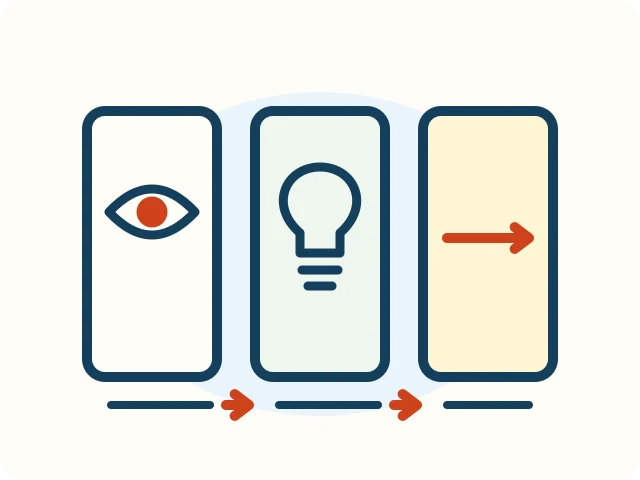
What, So What, Now What
A reflective dialogue method that moves through facts, meaning, and the next step in that order.
- When to choose it
- When conclusions or assumptions about causes come first, and you want to reflect starting with the facts.
- Preparation cautions
- Do not determine a cause from a single event. Keep different interpretations before choosing the next step.
- What remains at the end
- A record that separates facts and interpretations from next actions and responsibilities.
- When not to choose it
- Emergency command, or an investigation that needs to establish the facts themselves.
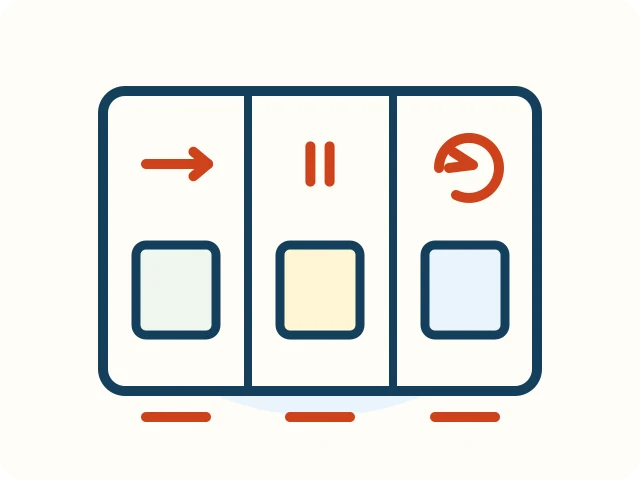
Stop, Start, Continue
A reflection method that uses three columns to choose what to start, stop, and continue, linking these choices to action in the next cycle.
- When to choose it
- When you want to choose actions to start, stop, and continue, and improve the next activity.
- Preparation cautions
- Do not just add more actions. Handle problems that require an investigation of causes separately.
- What remains at the end
- Actions to start, stop, and continue, who is responsible, and when to review them.
- When not to choose it
- When an investigation of causes or approval of resource allocation across departments is needed.
The sources and terms of use for each method's explanation and illustrations are given in the source section of the linked guide.
Sample programmes for combining methods
Reflect on Practice and Choose an Experiment
5–30 people · 75 minutes, including buffer time
Japanese source status: Draft
When you want to prepare the whole sequence from reflection to a commitment to an improvement experiment.
Briefly reflect on what happened, and record an improvement experiment within your own control and issues to keep pending.
Check the stages, materials, and responsibilitiesSample programmes are preparation references. Before running one, adjust the timing and roles to the participants and venue.
What to keep at the end
- The specific action to try next, and who is responsible.
- A date to check the result, and what to observe to judge whether it improved.
- What will not change this time, and issues to investigate later.
free session-planning sheet. Use it to record the purpose, responsibilities, and timing, and decide who will receive the session's records.
Language and implementation limits
- This English situation guide follows fixed source texts; it does not itself establish independent translation acceptance or approval to run a session.
- Method names and guide destinations use the explicit English registry where available. An untranslated dependency is labelled as a Japanese guide.
- Complete session-plan guides and starter guidance use English routes where implemented. The original downloadable session-planning files remain Japanese resources and are labelled by language.
- Japanese source status is editorial provenance only. It does not mean that this English guide has been reviewed or field-tested.
- Scene images are existing AI-generated illustrations, not records of actual events.