Choose for the situation
How to proceed when discussion does not reach a conclusion
Ideas emerge, but no decision follows, or the same discussion repeats. Distinguish between a lack of selection criteria and different understandings of the scope of agreement.
Discussion that does not converge may mean that people cannot choose between candidates, or that they cannot agree on what can be implemented. Requiring unanimity when the task is to rank options, or voting without knowing who has decision authority, can produce a conclusion that cannot be implemented. First make clear what you will decide today.

What to check first
- Will you narrow down ideas today, decide on implementation, or cover another defined scope?
- Are the shared selection criteria and the person who makes the final decision clear?
- Can you keep missing information and objections explicitly pending?
Identify the stage where progress has stopped
- Ideas are mixed together, and it is not clear what to compare
See a sample programme for organising the ideas raised - There are candidates to compare, but no agreed priority
See a sample programme for prioritising with shared criteria - Conditions or objections remain, and the scope of implementation is undecided
Compare the scope of agreement using the methods below
Choose a method that fits the session's conditions
These are not instructions to run both methods in sequence. Compare their conditions of use, then check the procedure for one candidate.
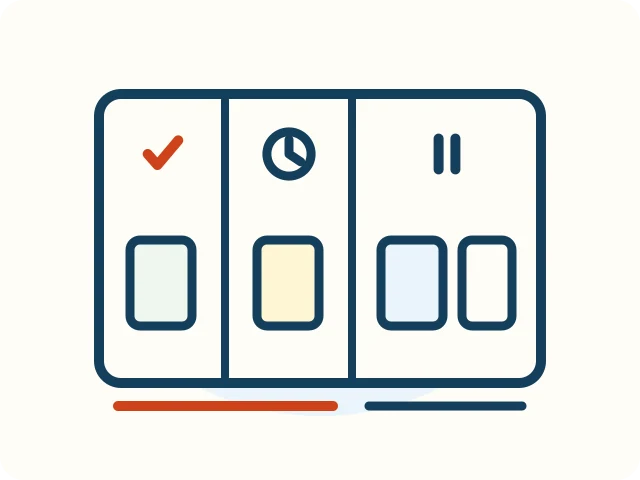
Partial Agreement Grid
A convergence method that separates issues into full agreement, conditional agreement, and no agreement.
- When to choose it
- When you want to separate what is agreed, what is agreed with conditions, and what is not yet agreed.
- Preparation cautions
- Do not hide points that remain unagreed or treat them as unanimity. Record who will check the conditions and by when.
- What remains at the end
- What to implement now, what is not yet agreed, and who will check the conditions and by when.
- When not to choose it
- When the session would replace final legal approval or force people who object to agree.
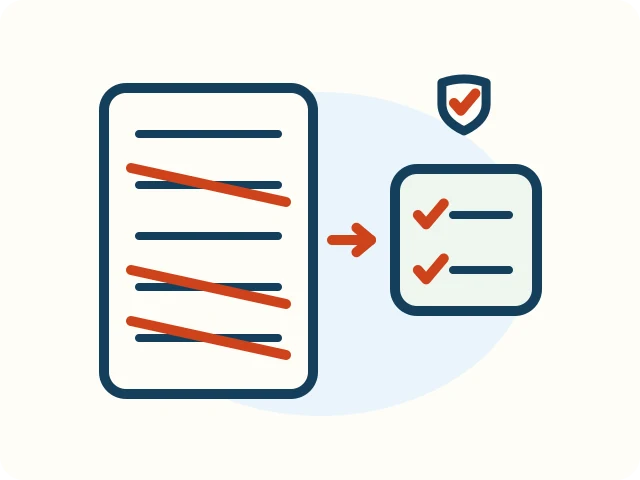
Min Specs
A method for removing rules that are not needed to fulfil the purpose, leaving only essential requirements.
- When to choose it
- When the purpose is shared, but an expanding set of requirements prevents progress.
- Preparation cautions
- Participants must not remove legal requirements, contractual obligations, or safety standards at their discretion. Do not use this method on its own when the purposes themselves differ.
The sources and terms of use for each method's explanation and illustrations are given in the source section of the linked guide.
Sample programmes for combining methods
Prioritize Without Dominance
5–20 people · 90 minutes, including buffer time
Japanese source status: Draft
When you want to compare several candidates using shared criteria and record priorities and conditions for revisiting them.
Put forward individual reasons first, rank the candidates using shared criteria, and record conditions for revisiting undecided candidates.
Check the stages, materials, and responsibilitiesSeparate Agreement from Decision Authority
4–20 people · 120 minutes, including buffer time
Japanese source status: Draft
When you need to clarify the scope of agreement and decision authority rather than priorities.
Clarify what participants can agree on and what only the responsible person can decide.
Check the stages, materials, and responsibilitiesSample programmes are preparation references. Before running one, adjust the timing and roles to the participants and venue.
What to keep at the end
- What can be implemented now, and what has not yet been decided.
- Who will check the conditions, and the deadline for doing so.
- Conditions for reconsidering the decision if information changes, and who makes the final judgement.
free session-planning sheet. Use it to record the purpose, responsibilities, and timing, and decide who will receive the session's records.
Language and implementation limits
- This English situation guide follows fixed source texts; it does not itself establish independent translation acceptance or approval to run a session.
- Method names and guide destinations use the explicit English registry where available. An untranslated dependency is labelled as a Japanese guide.
- Complete session-plan guides and starter guidance use English routes where implemented. The original downloadable session-planning files remain Japanese resources and are labelled by language.
- Japanese source status is editorial provenance only. It does not mean that this English guide has been reviewed or field-tested.
- Scene images are existing AI-generated illustrations, not records of actual events.